
.gif)
.gif)

Good Practices

To submit your own Good Practice, please complete this form.
Please note that the publication of Good Practices on this website depends on their relevance to the circular economy, completeness and clarity of information, practical character of expected results, awareness-raising and educational components. Texts and content submitted to the site may be edited for the purpose of clarity and compliance to standardised presentation on the website. For further information, please contact our Secretariat.
Wondering how we select good practices for actual publication on the website? You can check our guidelines here.
Displaying 1 - 6 of 6
Wiltz - a Circular Economy Hotspot in the heart of Ardennes
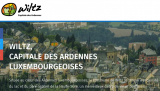
In October 2015 the Luxembourg government named the municipality of Wiltz a Circular Economy Hotspot. In February 2018 Wiltz renewed its political commitment with a Circular Economy Charter signed by its municipal council, by which it committed itself to mainstreaming circular economy in its future project and activities in order to improve its global footprint on the Ardennes region and to take on its responsibilities towards future generations of citizens.
Kalundborg Symbiosis: six decades of a circular approach to production

Kalundborg Symbiosis is a partnership between nine public and private companies in Kalundborg, Denmark.
Do we have waste in 2030? - The role of municipalities in the transition to a circular economy

The purpose of the project has been to highlight the possibilities the municipalities and regions have to accommodate a more circular economy in the future.
SwitchMed Civil Society Programme
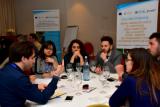
EU-funded SwitchMed Programme supports and connects stakeholders to scale-up social and eco-innovations in the Mediterranean. It promotes inclusive growth, job creation and sustainable development by supporting policy makers, eco-innovative small and medium sized enterprises, industries, start-ups and entrepreneurs in the Southern Mediterranean countries.
Banning Single-Use Plastic Bags: Good practices Guide for Local Authorities
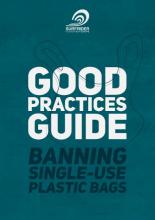
8 billion plastic bags end up in the environment in Europe every year. They have dramatic impacts on the environment, and especially on marine ecosystems, killing every year thousands of marine animals, and affecting no less than 260 different species.
ELIPSE : le référentiel pour l'évaluation des performances des démarches d'écologie industrielle et territoriale (EIT)

Le référentiel ELIPSE est un outil qui permet d’assurer l’évaluation et le suivi des démarches d’écologie industrielle et territoriale (EIT).

Нема коментара:
Постави коментар